
Tip #1 Identify the four major areas of succession planning to be attended to: emergency succession planning, planned departure succession planning, creating a strong leader development program and board succession planning.
Tip #2 Emergency succession planning and creating a leader development program are operational responsibilities. The responsibility for making these two components a reality rests with senior management. The board of directors may set a policy that requires both plans to exist in writing and provide them to the board for information only.
Tip #3 Planned departure and board succession planning are board responsibilities. However, it often falls to the executive director to initiate both activities. Most boards will benefit from assistance from an internal or external facilitator to guide the process of developing the written succession plans.
Tip #4 Succession planning is not the same as successor planning! One third of all new executive directors come from inside the organization. Planning for succession includes, but is not limited to, the search and selection process.
Tip #5 Consult with others inside and outside the organization regarding the most desirable qualifications, competencies and qualities required in a new executive director. Reflect their advice in a position (or candidate) profile.
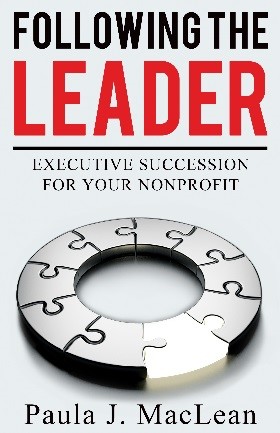
Check out my latest book “Following the Leader – Executive Succession for your Nonprofit”. It covers everything a board and current ED need to know about making leadership succession as organized and painless as possible. Click here for more: https://learningforleaders.ca/shop/
Paula J. MacLean is the best-selling author of six books for nonprofit leaders. She is an educator and coach for Canadian nonprofit managers, ED/CEOs and boards of directors. Visit learningforleaders.ca for information on online video training (including two free courses), to sign-up for blog posts and for information about books and ebooks.